Menu logo

Software Development Life Cycle (SDLC) Course

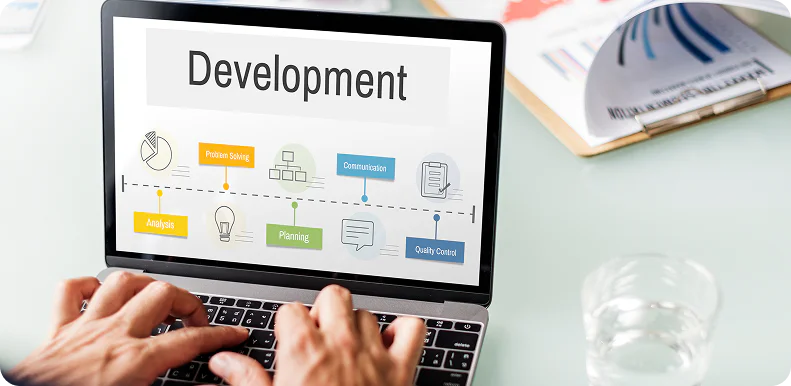
The SLDC course is designed to help trainees gain a comprehensive understanding of software development methodologies, including Agile, Scrum, Waterfall, and DevOps. They learn requirements analysis, system design, testing, deployment, and maintenance processes through practical case studies. Cronus Consultants focuses on real-world project integration to help learners understand cross-functional collaboration. By enrolling in this course, candidates are effectively prepared in software project management, improving their ability to contribute to development teams across industries.
content img

Why choose Cronus Consultants to master the SDLC course?

At Cronus Consultants, the SDLC course emphasizes structured development methodologies, including Agile, Scrum, and DevOps practices. Here, the mentors encourage participants to engage in requirements analysis, design, testing, and deployment cycles through live projects. It enables them to understand end-to-end software delivery with industry-relevant tools and documentation standards.

Curriculum Overview

Download Syllabus
  • Introduction to Modern SDLC: Traditional vs. AI-Driven SDLC workflows.
  • AI/LLM Landscape: Overview of Generative AI, Large Language Models (LLMs), and prompt engineering fundamentals.
  • Agentic AI Basics: Understanding autonomous AI agents and proactive problem-solving.
  • Setting up the Environment: Configuring IDEs with AI assistants (e.g., GitHub Copilot, Cursor, CodeWhisperer).
  • Intelligent Requirement Analysis: Using NLP to extract requirements from stakeholder conversations.
  • Automated User Story Generation: Generating structured user stories, acceptance criteria, and technical documentation using AI.
  • AI for Project Estimation: Using historical data to predict project risks, timelines, and resource allocation.
  • Architectural Modeling with AI: Using GenAI to generate UML diagrams, database schemas, and system design documents.
  • AI-Driven Prototyping: Rapidly generating front-end code (HTML/CSS/JS) from whiteboard sketches or wireframes.
  • Tech Stack Optimization: AI tools to analyze the best technology options based on project requirements.
  • AI Pair Programming: Leveraging Copilot/LLMs for boilerplate generation, code completion, and boilerplating.
  • Refactoring and Code Optimization: Utilizing LLMs to refactor legacy code for performance and readability.
  • Automated Documentation: Generating code comments, API documentation, and technical notes.
  • Code Explanation and Review: Using AI to explain complex codebases and perform automated code reviews.
  • AI Test Case Generation: Automating unit, integration, and functional test case creation from code.
  • Intelligent Debugging: Using AI to locate bugs, identify root causes, and suggest fixes.
  • Automated Security Testing: Using Agentic AI to find vulnerabilities (e.g., SQL injection, XSS) in code early in the cycle.
  • Visual Regression Testing: Utilizing computer vision to detect UI inconsistencies.
  • CI/CD Pipeline Optimization: Using AI to manage CI/CD workflows, predicting build failures.
  • Intelligent Monitoring: Applying Machine Learning for anomaly detection in production.
  • Automated Release Management: Generating release notes and deploying with AI-guided rollback capabilities.
  • CI/CD Pipeline Optimization: Using AI to manage CI/CD workflows, predicting build failures.
  • Intelligent Monitoring: Applying Machine Learning for anomaly detection in production.
  • Automated Release Management: Generating release notes and deploying with AI-guided rollback capabilities.
  • End-to-End Project: Developing a fully functional application utilizing AI at every phase (from requirements to deployment).
  • Human-in-the-Loop Governance: Understanding the importance of human supervision and ethical AI usage.

Key Features

logo

Process clarity

Clearly understand the structured phases of the SDLC, from planning to deployment.

logo

Agile methodologies concepts

Learn Scrum, sprint cycles, and adaptive development practices.

logo

Quality assurance

Ensure robust and error-free software by implementing testing strategies.

logo

Project lifecycle management

With an industry-standard framework, learn to track, manage, and deliver projects.

Who can pursue this course?

BBA B.A. B.Sc (Computer Science) M.Sc (Computer Science) B.TECH M.TECH Commerce MBA

BASIC

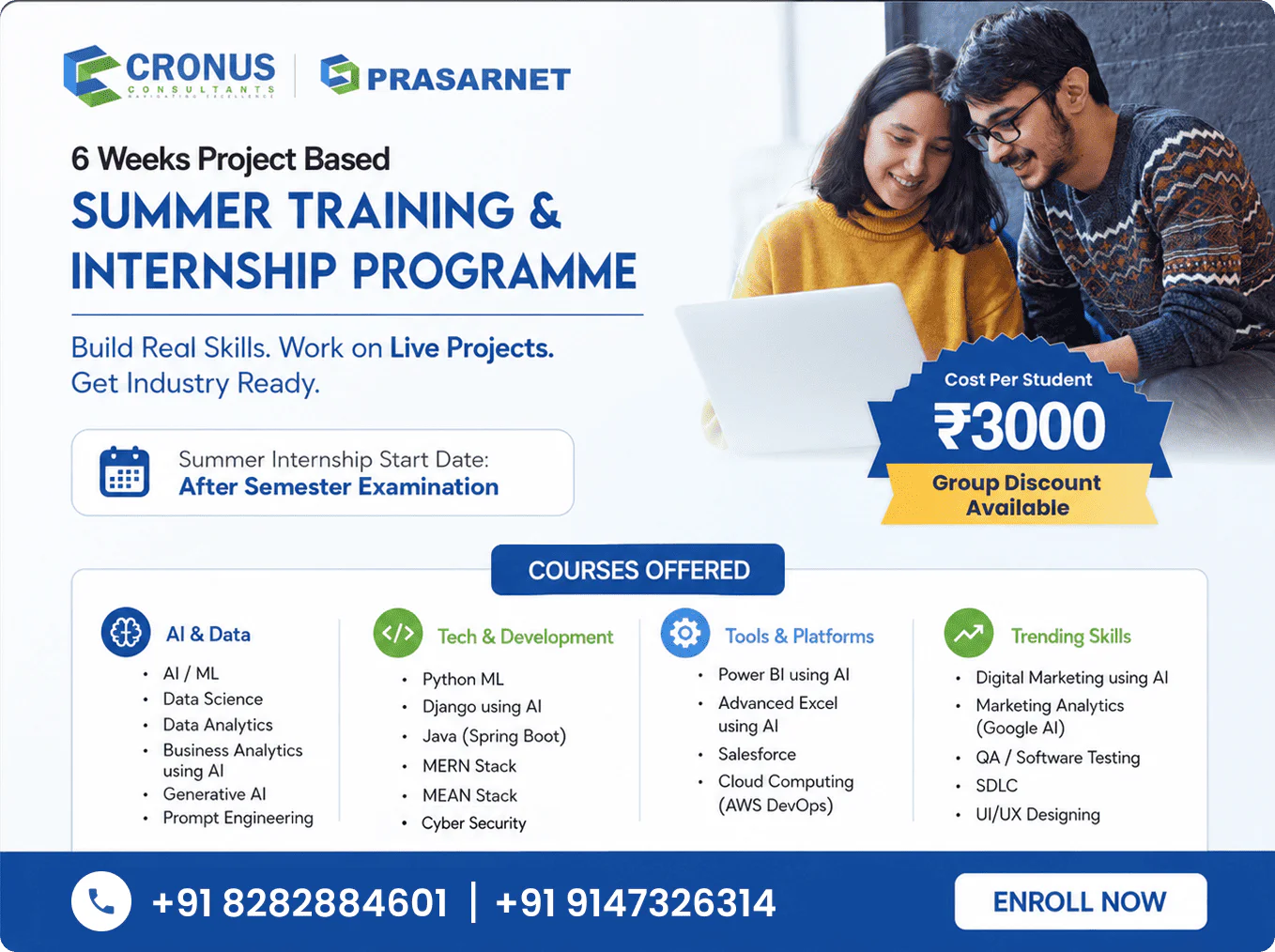
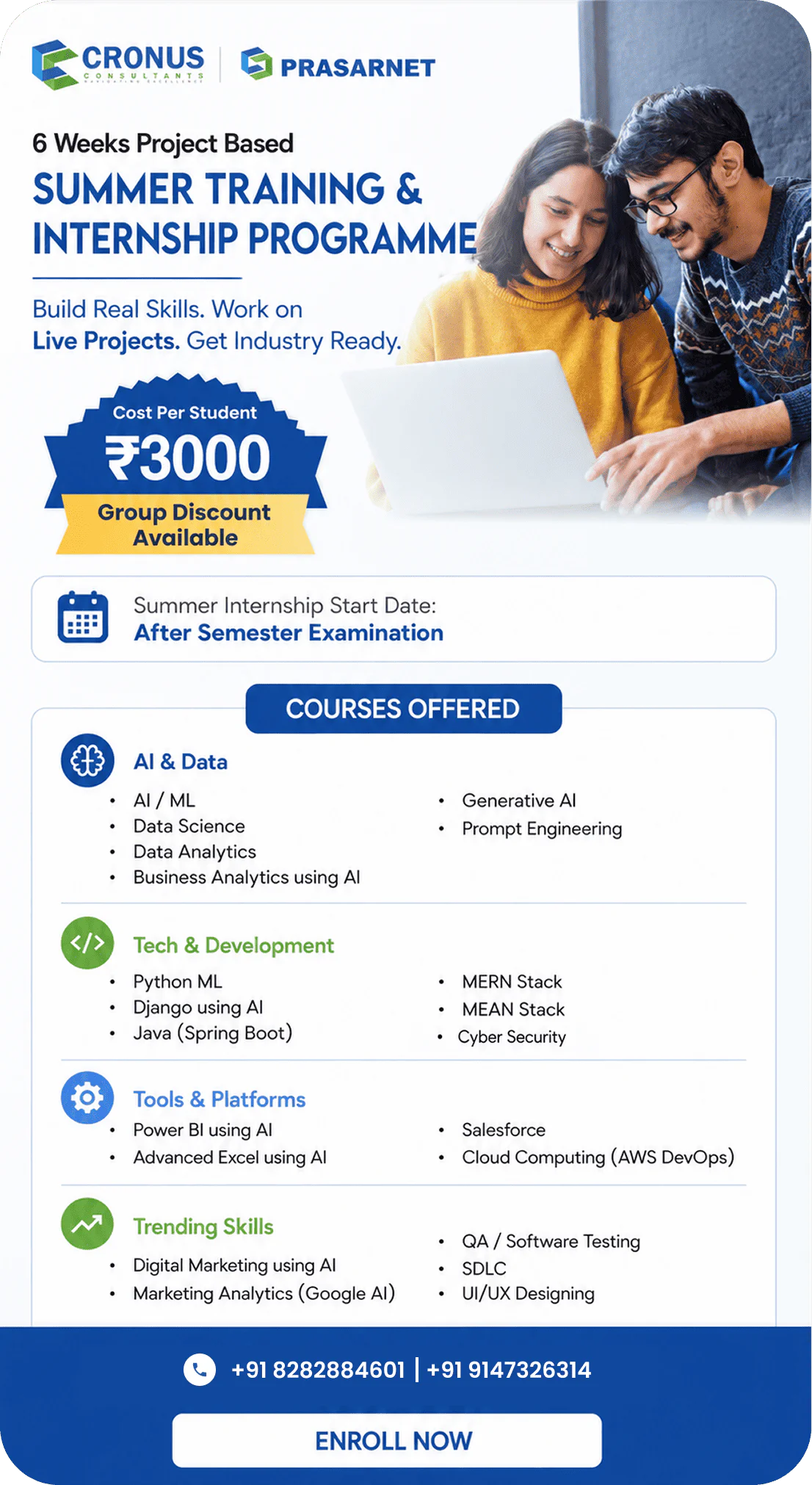
₹ 3,000 /one-time

Duration: 6 weeks

Enroll Now Talk to Advisor
  • Industry-Focused Training
  • Career-Oriented Curriculum
  • Expert Mentor Guidance
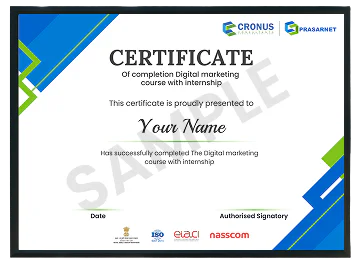
  • Certification on Completion

Certification & career support

icon

Skill certification

Earn a certificate and validate the practical skills you have learned.

icon

Professional edge

Add your earned certification to your resume and stand out to employers.

icon

Career advancement

Show your certification that highlights your skills, achievements, and job-readiness.
img
img

Talk to Industry Experts

Discuss your goals with industry professionals and get clear career direction.

    Fill all the necessary filed *


    talkto_experts img